
September 14, 2026
Will Kremer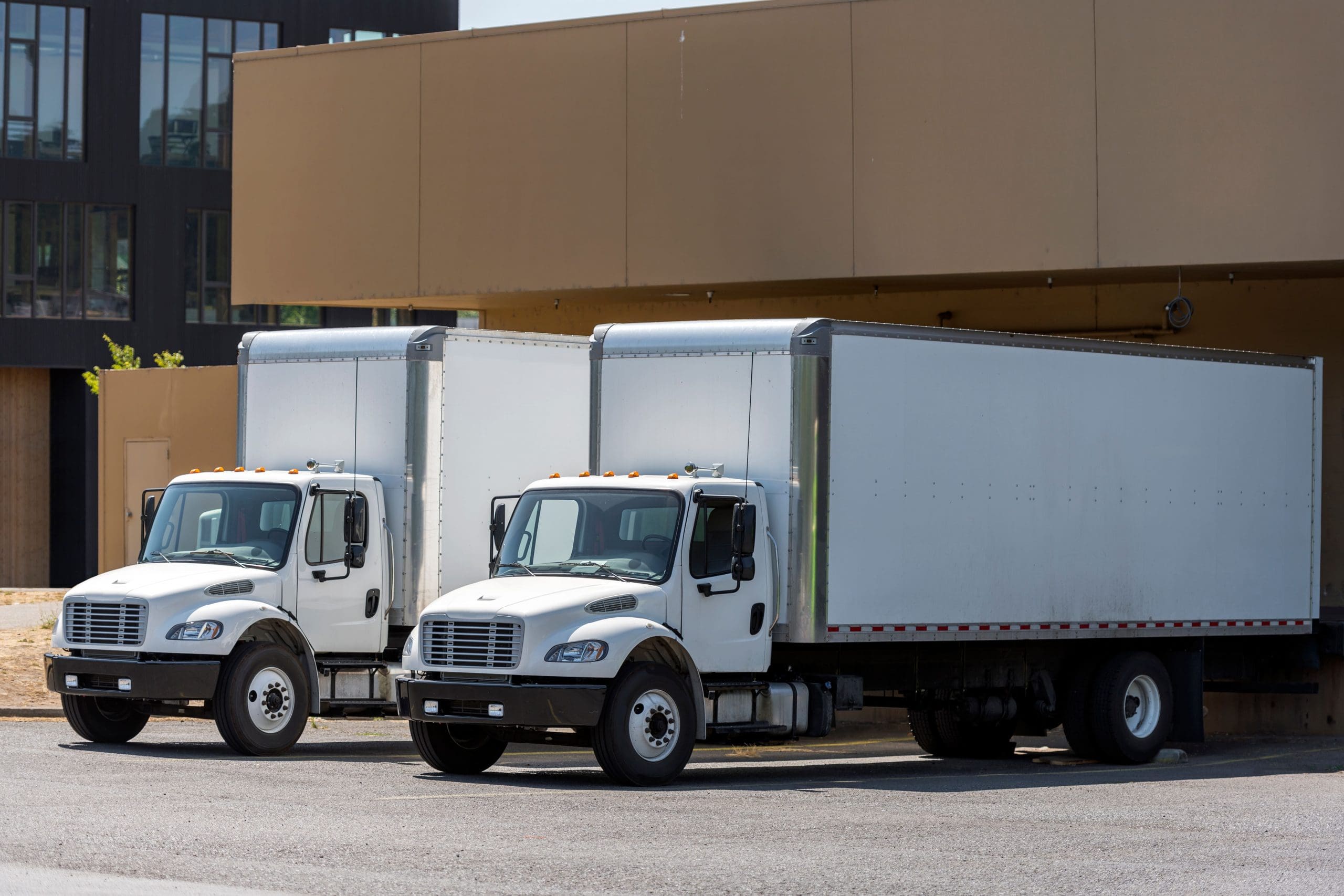
How to Start a Box Truck Business: The Six Steps, Who to Contact, and What It Costs
By Will Kremer, Truck Insurance Agent · Last updated September 14, 2026
You have decided to start a box truck business. That is a real decision, and a good one: a box truck is the most direct way into trucking with one truck, no employees, and lanes that get you home at night. We write new box truck ventures every week, so we get to watch a lot of people take this exact first step, and the ones who get rolling fastest all do the same six things in the same order. This is that list: what to do, who to contact, which government agencies you register with, what each step costs, and how the whole thing fits together so your first month is spent hauling instead of waiting.
|
The short answer To start a box truck business, form the company, get your USDOT and MC numbers, pick a truck and a driver, get your insurance quoted and filed, then find freight, in that order. The MC number does not go active until the insurance is filed, and the insurance cannot be quoted until you have the DOT number and a VIN. Budget $12,000 to $25,000 for first-year insurance on a brand-new authority ($6,000 to $15,000 for a non-CDL box truck), a $1,200 to $6,000 down payment, and $300 for the MC number itself. |
|
Key takeaways
|
How to start a box truck business: the six steps in the right order
Each step depends on the one before it, so work them in order. Here is who you deal with at each one and what it costs.
1. Decide what you will haul and whether you need a CDL
Start with the freight, not the truck. Local LTL and expedited freight, contract work for a regional shipper, and Relay line-haul each point you at a different truck size, radius, and cargo limit. Decide roughly what you want to haul and how far you want to go. It does not have to be exact. When we quote a new venture we need an idea of the freight and the radius, and we build in room for that to change in the first year or two, because it always does. The freight decides the truck: a 16 or 26 footer with a lift gate if Amazon Relay is the plan, a 16 to 24 foot non-CDL truck for most local and regional work. (Whether you need a CDL comes down to the truck’s weight rating, covered near the end of this guide.)
2. Form the company
Who you deal with: your state’s Secretary of State (or its business-filing division) for the LLC, and the IRS for the EIN.
Form the LLC and get an EIN before you apply for anything with FMCSA. The USDOT and MC registrations are tied to the legal entity, and so is the insurance policy, so the company has to exist first. File the LLC directly on your state’s Secretary of State website; the SBA’s registration guide links every state’s filing office, and the fee varies by state. Then get your EIN free at IRS.gov; it takes about ten minutes online. Open a business bank account the same week. The insurance down payment and the MC fee both come out of it, and keeping the business money separate from day one saves a headache at tax time.
3. Get your USDOT number and apply for your MC number
Who you deal with: FMCSA, through its MOTUS registration system, for both numbers; a BOC-3 process agent; and the UCR registration system.
Register the company in FMCSA’s MOTUS system to get a USDOT number, then apply for MC operating authority in the same system. The USDOT number is free and usually issues within a day; the MC application is $300. Two small filings ride along with it: a BOC-3 process agent designation (a one-time filing, about $25, and you should never pay it as a yearly subscription) and your UCR registration, an annual interstate fee of $46 for a one or two truck operation. Our step-by-step on how to get your MC and DOT numbers covers the whole process, and what an MC number costs separates the real fees from the packages people try to sell you.
Here is the part most guides skip. The MC number does not go active when you pay the $300. It goes active after your insurance company files proof of liability coverage with FMCSA and your BOC-3 process agent filing is on record. So the MC application is what starts the clock, and the insurance is what stops it. You need the DOT number in hand before any agency can quote you, which is why this step comes before the truck and the insurance, not after.
4. Pick the truck and the driver
To quote a new box truck venture we need a VIN, the driver, the owner’s information, the DOT number, what you plan to haul, and how far. The VIN is the one people are most often missing. Whether you buy, finance, or lease, you need a specific truck identified before the quote, so line the truck up before you call, even if the sale has not closed. A signed purchase agreement with the VIN on it is enough to get started.
Own the truck if you can. A leased or rented box truck is rated the same way as an owned one, but some of the markets that write new ventures will not take a leased unit at all. Their reasoning is simple: an owner tends to take better care of a truck than a lessee, and nobody knows how the rental company maintained it before you. If leasing is the only way to launch, it can be done, but plan the maintenance side from the beginning. A leased box truck still carries your DOT number, and the inspection record follows your authority, not the leasing company’s.
5. Get the insurance quoted, bound, and filed
This is the step that activates the business. With the DOT number, VIN, and driver in hand, an agency that writes new ventures can quote you in a day and bind the same day if you need it. In practice, most new box truck ventures go from the first call to a bound policy in one to three weeks, because that is how long it takes people to get the truck and the paperwork lined up. Once you bind, the insurance company files the liability certificate with FMCSA, the BOC-3 gets filed, and FMCSA grants the authority. A first-year policy for a brand-new authority box truck runs $12,000 to $25,000 a year ($1,000 to $2,085 a month); a non-CDL box truck can run $6,000 to $15,000. Expect $1,200 to $6,000 down, with the rest in monthly installments.
New ventures are a specialty for us. Our markets are built to give a first- and second-year business room to change lanes, add a truck, or swap drivers without starting over, and we write a lot of them. If you want to see what a first-year policy looks like and which markets write brand-new authorities, our new venture truck insurance page covers it, and the box truck insurance cost guide breaks the premium down by truck size and operation.
6. Find freight
With an active MC, you can take loads from brokers and load boards, sign direct contracts with local shippers, and apply to carrier programs. A word on Amazon Relay, since it is the plan for a lot of box truck startups: Relay’s carrier requirements call for an interstate DOT authority that has been active for at least 180 days, $1,000,000 in auto liability, $100,000 in cargo coverage, and for box trucks, a 16 or 26 footer with a working tuck-under lift gate. That means Relay is a month-seven plan, not a day-one plan, and the six months are not just a waiting period. Relay also checks your safety scores, so those months are your chance to prove you can run a clean operation. Plenty of the box truck ventures we write have Relay as the whole business plan, and we have markets that fit it. Budget the first six months on other freight, keep the inspections clean, and if Relay is the goal, buy a 16 or 26 footer with a tuck-under lift gate from the start.
How much it costs to start a box truck business
Leaving the truck itself aside, since that ranges from a used 16 footer to a new 26 footer with a lift gate, here is what the authority and insurance side costs in year one. These are the figures we quote new box truck ventures against.
| Item | Cost |
|---|---|
| LLC filing and EIN | Varies by state (EIN is free) |
| USDOT number | Free |
| MC operating authority | $300 one time |
| BOC-3 process agent | About $25 one time (skip anyone charging it yearly) |
| UCR registration (1 to 2 trucks) | $46 per year |
| First-year insurance, new authority | $1,000 to $2,085/mo ($12,000 to $25,000/yr) |
| First-year insurance, non-CDL box truck | $500 to $1,250/mo ($6,000 to $15,000/yr) |
| Insurance down payment | $1,200 to $6,000 up front |
Two things stand out. The government fees are small; the whole authority costs less than a set of tires. And the insurance down payment is the one startup cost that has to be cash on the day you bind, so it is the number to plan the launch around. If you are searching “how to start a box truck business with no money,” the honest answer is that the down payment is the floor. Everything else can be financed or deferred; that cannot.
Starting a non-CDL box truck business: the checklist
Same six steps, written as the list you can actually work through. This is what we ask a new box truck venture to have ready before the quote call.
- Freight plan. What you will haul, roughly how far, and whether Relay is a month-seven goal.
- Truck size decided. 16 or 26 foot with a lift gate if Relay is the goal; a 16 to 24 foot non-CDL truck for most other work.
- LLC formed, EIN issued, business bank account open.
- USDOT number issued, MC application filed in MOTUS ($300 paid), BOC-3 agent designated, UCR registered.
- VIN in hand. Purchase agreement, finance approval, or lease with the truck identified.
- Driver identified, with their license and driving record available. If that is you, same thing.
- Owner information and a one-page business plan (lanes, freight, monthly revenue target). It does not have to be polished.
- Down payment set aside: $1,200 to $6,000, ready on binding day.
- Quote, bind, and let the insurance filing activate the MC. Then the BOC-3.
- Maintenance log started before the first load, not after the first inspection.
What the box truck startups that reach their first renewal do differently
We see a lot of box truck ventures come through their first year, and the ones that make it to renewal share a habit that has nothing to do with finding loads. They take maintenance seriously, and they take it seriously from day one.
On a box truck, a maintenance problem is a safety-score problem. Brakes, lights, tires, and a lift gate that does not latch all show up at roadside inspections, and a new authority is under FMCSA’s New Entrant program for its first 18 months, so those inspections count double. The startups that get through year one do pre-trip and post-trip inspections every day, fix small things before they become out-of-service violations, and document all of it. That goes double for rented and leased box trucks, where it is tempting to assume someone else is handling the upkeep. They are not. The violations land on your DOT number.
The other thing they do is pick up the phone. The operators who reach renewal treat their insurance agent like part of the business: they call with a question about a broker’s certificate request before they sign, they call when something happens on the road before it becomes a claim, and they call before adding a truck instead of after. That is the relationship we try to build with every new venture, because a problem handled on the front end is almost always smaller than the same problem handled on the back end.
Do you need a CDL for a box truck business?
Only if the truck is rated at 26,001 pounds or more. Under federal rules (49 CFR 383.5), a single vehicle with a gross vehicle weight rating of 26,001 pounds or more is a Group B commercial motor vehicle and requires a CDL. Under that line, no CDL is needed. Most 16 to 24 foot box trucks are rated under it; most 26 footers are rated right at or above it. That is the whole “non-CDL box truck” question, and it does not change the insurance much: a non-CDL box truck and a CDL box truck go to roughly the same new-venture markets. Pick the truck for the freight and check the weight rating on the door-jamb plate before you buy.
Frequently asked questions
Is a box truck business profitable?
It can be, and the ones we insure that make it to year two usually are. Profit comes down to keeping the truck loaded, keeping the truck running, and keeping fixed costs predictable. Insurance is the largest fixed cost in year one, which is why knowing the $12,000 to $25,000 band before you buy the truck matters so much.
How much money do I need to start a box truck company?
Excluding the truck, plan on $300 for the MC number, about $25 for the BOC-3, $46 for UCR, your state’s LLC fee, and a $1,200 to $6,000 insurance down payment, with the rest of a $12,000 to $25,000 first-year premium paid monthly. The down payment is the cash you must have on binding day; the rest can be spread out.
What license do I need for a 26 ft box truck?
It depends on the truck’s gross vehicle weight rating, not its length. At 26,001 pounds GVWR or more, federal rules require a CDL. Many 26 footers are rated at exactly 26,000 pounds to stay under the line, and some are rated above it. Check the door-jamb plate before you buy.
Do I need an LLC to start a box truck business?
You need a legal entity to register with FMCSA and to hold the insurance policy, and for most single-truck startups that is an LLC. Talk to an accountant about the entity type; what matters for the launch is that the company exists before you apply for the DOT number.
Can I start a box truck business with no money?
Not with none, but with less than most people assume. The truck can be leased or financed, the authority costs under $400 in government fees, and the insurance is paid monthly after a down payment. The down payment, $1,200 to $6,000 depending on the policy, is the real minimum. Plan the launch around that number.
How long does it take to start a box truck business?
From the first call to a bound insurance policy, most new box truck ventures take one to three weeks, and the quote itself can be bound in a day once you have the DOT number and a VIN. The MC number activates after the insurance is filed, then plan on about six months of freight before Relay will consider you.
What insurance does a box truck business need?
At minimum, primary auto liability, which is the coverage FMCSA files to activate your MC, and motor truck cargo, which brokers and programs like Relay require before they will load you. Most new ventures add physical damage on the truck, especially if it is financed. Our guide to non-CDL box truck insurance covers the stack and the limits brokers ask for.
Ready to get the insurance step done?
If you have your DOT number and a VIN, we can usually quote a new box truck venture the same day, and our markets are built for a business that is still figuring out its lanes. If you are still a step or two back, call anyway. Knowing your insurance number before you buy the truck is the single best piece of planning you can do.
Get your new venture quote → or call 855-281-2924 and talk to an agent who writes new box truck businesses every week.
|
About the author Will Kremer, Truck Insurance Agent A truck insurance agent at Trucking Insurance Services since 2011, Will Kremer specializes in owner-operators, new ventures, and fleets, and helps truckers pick the coverage that fits how they actually run. |
Premium figures are estimates based on the new venture policies we place and current market rates, for general guidance only. Your actual premium depends on your record, equipment, radius, and limits. Regulatory requirements are summarized from FMCSA and Amazon Relay sources current as of the date above; confirm them at the source before relying on them. Get a quote for an exact number.
Categories: Blog, Trucking Insurance